ServicesWater Softeners
Water Softener Installation in Tolleson, Fitted and Left Tidy
We size a softener from a test of your own water, then install it with your floors covered and your garage or utility area left the way we found it. You get softer water at every tap and a system set up to run quietly for years.
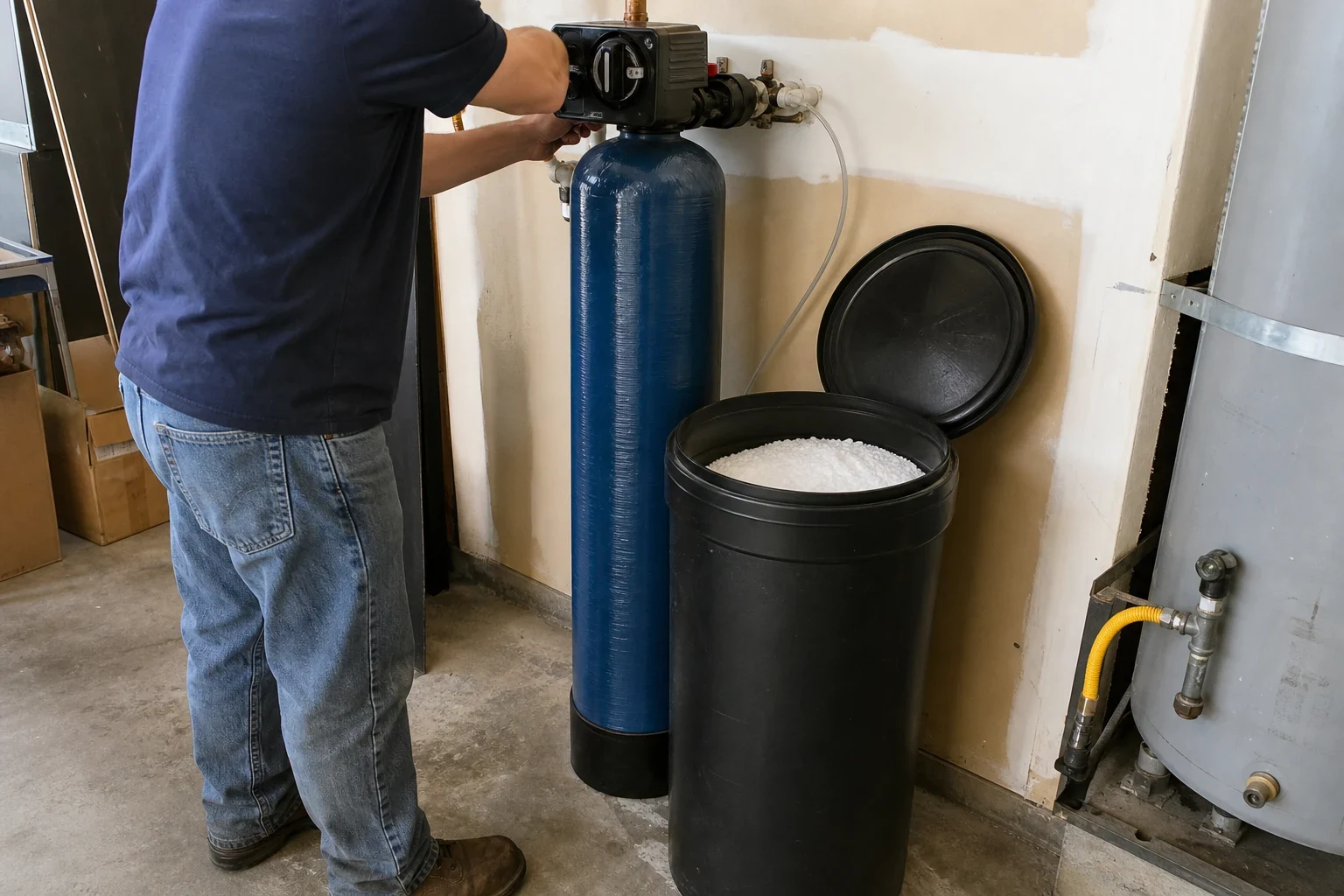
How Softening Works and Whether Your Home Needs It
Calcium and magnesium ride along in hard water without you seeing them. Once that water is heated or left to dry, they stay behind as chalky scale on fixtures, glass and the inner walls of your water heater. A softener stops that at the source. Water passes through a tank of resin beads that hold on to the hardness minerals and release sodium or potassium in their place. On a set schedule, brine from the salt tank rinses the beads and recharges them.
Hard water is common across the West Valley, yet we never assume. A test at your tap gives us the hardness figure, and a few questions about your household give us daily use. Together they decide how big the resin tank should be and how often it regenerates. Undersize it and hard water slips through before the next cycle. Oversize it and you spend extra salt and rinse water for nothing.
Because the work happens inside your home, we treat it that way: drop cloths go down before any pipe is cut, joints are made neatly, and old parts leave with us.
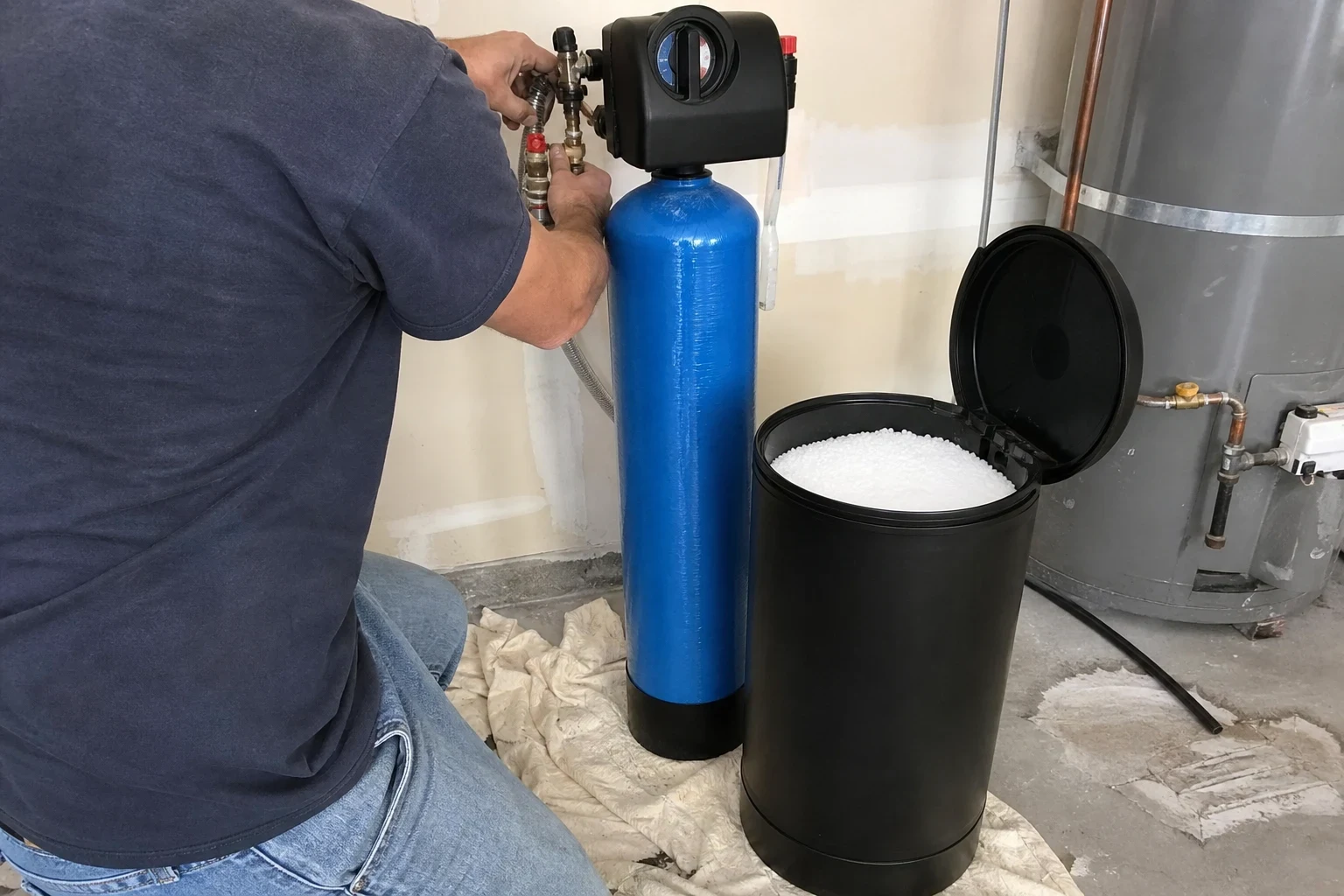
What Your Softener Install Includes
- 01
A free water test first
We check hardness at your tap and talk through what you are seeing. The test comes with zero obligation, and it is the basis for every recommendation we make.
- 02
Resin tank, brine tank and control valve
We fit a resin tank matched to your hardness and usage, a brine tank for salt, and a control valve programmed for your household. Install is included with the system.
- 03
Bypass valve and sound connections
The softener ties into your main line with a bypass, so you can take it out of service without shutting off water to the whole house. Joints are square, supported and checked for leaks under pressure.
- 04
A proper drain connection
Each regeneration sends rinse water to a drain. We route that line to a standpipe or floor drain and leave open air above the outlet, which keeps used rinse water from ever being drawn back into your pipes.
- 05
Protection and a tidy finish
Floors and walls near the work area are covered before work starts. When we finish, offcuts, packaging and any old equipment leave with us, and the area is wiped down.
Questions about Water Softeners?
Call(480) 906-3934How Hard Water Shows Up Around the House
Crust that returns after cleaning
A whitish, rough ring builds up at the base of the faucet and around the showerhead openings, and it is back a few days after you scrub it off.
Hazy glassware and streaky shower glass
Dishwasher glasses come out filmy, and shower doors keep their streaks whatever cleaner you try.
Soap that barely suds
You need extra shampoo and dish soap to work up a foam, and after a shower your skin and hair feel dry or coated.
Popping sounds from the water heater
Mineral sediment settles in a layer at the bottom of the tank and crackles as the heater comes up to temperature. That layer also makes the heater burn more energy for the same hot water.
A softener that uses salt but does nothing
When the brine tank keeps emptying and scale still forms on your fixtures, the resin may be worn out or the valve may be going bad. We will give you a straight answer on whether to repair it or replace it.
How the Work Goes, From Phone Call to Cleanup
- 1
Talk it through and test
On the phone we ask what you have noticed and set up your free water test. The result tells us whether a softener is the right answer or whether something like whole-home filtration fits better.
- 2
Installed pricing before anything is booked
We explain the size we recommend and why, then give you installed pricing by phone. Install is included with the system, so the number covers the equipment and the work.
- 3
Install day
The plumber lays down protection, shuts off the main, cuts in the bypass and connects the drain line. Most installs fit inside a few hours, and your water is off for only part of that time.
- 4
Setup, walkthrough and a tidy finish
We fill the brine tank, program the valve for your hardness and household size, and run a first regeneration. Before leaving, we show you how to add salt and use the bypass, then clean up the area.
What Goes Into a Softener's Price
Softener installs are rarely priced the same, since the right setup comes down to your water and your pipes. After the free test, we quote an installed price by phone, and the install is part of it. These are the things that change that figure.
- Hardness and household use
- Very hard water and a full house put more load on the resin between regenerations. Handling that takes a bigger resin tank and a brine tank that holds more salt.
- Plumbing location
- Lots of homes come with a softener loop near the garage or utility area. If yours does not, new pipe has to be run to the main line, which adds labor and parts.
- Kind of control valve
- A metered valve recharges according to how much water you actually use and usually saves salt in the long run. A basic timer valve is cheaper at the start.
- Taking out an old unit
- Some jobs include draining, unhooking and hauling off a softener that is already there, and some do not.
- Adding other treatment
- When your test also turns up a chlorine taste you want removed, adding a carbon stage or a reverse osmosis unit under the kitchen sink changes the size of the job.
Water Softener Questions We Hear Most
Will softened water taste salty?
For most homes, no. The sodium added tracks how hard the water was to begin with, and it is usually too little to notice. If you prefer, potassium chloride can go in the brine tank instead of salt, or a reverse osmosis unit can supply your drinking water.
How often do I need to add salt?
Most households top up every month or two. The real interval comes down to how hard your water is, how much you run through the taps and how the valve is programmed. During the walkthrough we show you the fill level to keep.
Can the softener go in my garage?
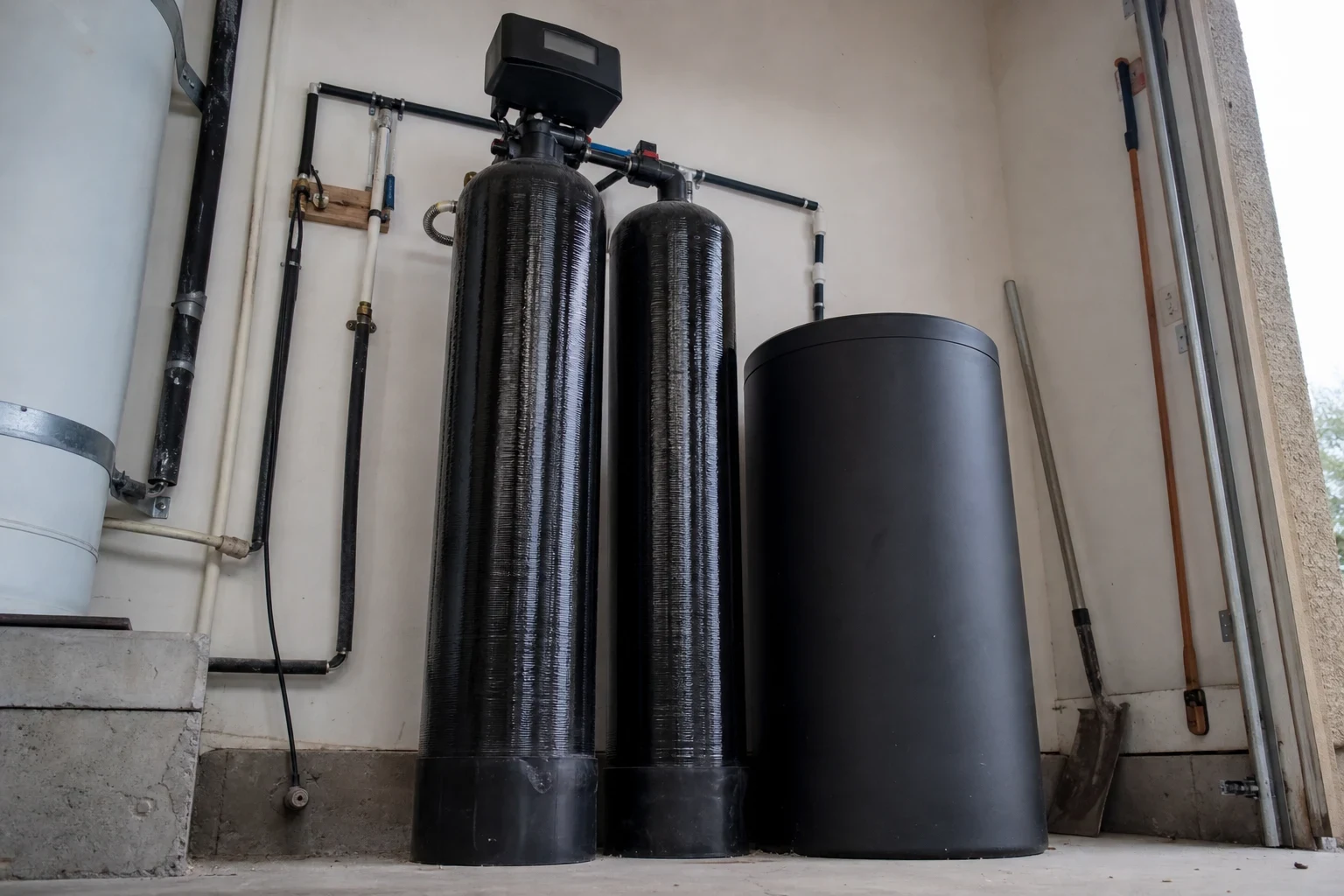
Usually, yes, and that is where many homes already have a loop for one. We look at the space during the test so we can plan for a level spot, a nearby drain and an outlet for the control valve.
Who actually does the installation?
A partner plumber we work with regularly handles the install itself. We stay involved from the first call through cleanup, so you have one point of contact the whole way and one number to ring with questions afterward.
What warranty comes with the system?
Qualifying systems carry a lifetime warranty on their tanks. Not every model is covered, so we confirm whether the softener you are weighing is one of them before you make a decision.
Does a softener remove chlorine or other contaminants?
No. A softener takes out hardness minerals and not much else. For taste and odor, look at whole-home filtration, and for drinking and cooking water, reverse osmosis is the better fit. Our water testing helps sort out which you need.
Start With a Free Test of Your Water
We will measure your hardness, explain what size softener makes sense and give you installed pricing by phone. You can also read our 3 five-star Google reviews before you decide.